

Introduction
When you bite into a freshly baked muffin or a slice of fluffy cake, have you ever wondered what gives these treats their light and airy texture?
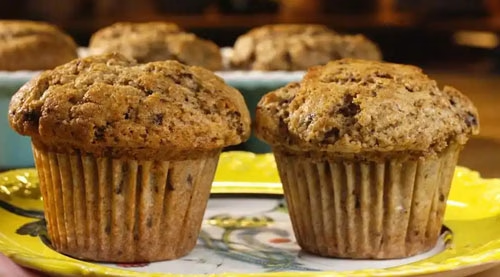
The answer often lies in a common household ingredient: sodium bicarbonate. Known to most as baking soda, sodium bicarbonate is a staple in the world of baking. It’s that tiny white powder that works wonders in the kitchen, transforming simple batters and doughs into deliciously risen creations. But why is it so crucial for baking? Let’s delve into the science and art behind its use.
The Leavening Powerhouse
At the heart of sodium bicarbonate’s baking magic is its ability to release carbon dioxide gas when heated. This seemingly simple chemical reaction is what makes our cakes and breads rise to perfection. When you place a dough or batter containing sodium bicarbonate into a hot oven, the heat triggers the decomposition of the compound.
The chemical equation
2 NaHCO₃ → Na₂CO₃ + H₂O + CO₂↑
shows how each molecule of sodium bicarbonate breaks down to form sodium carbonate, water, and, most importantly, carbon dioxide. Related article: What’s the Reaction between Acetic Acid and Sodium Bicarbonate.
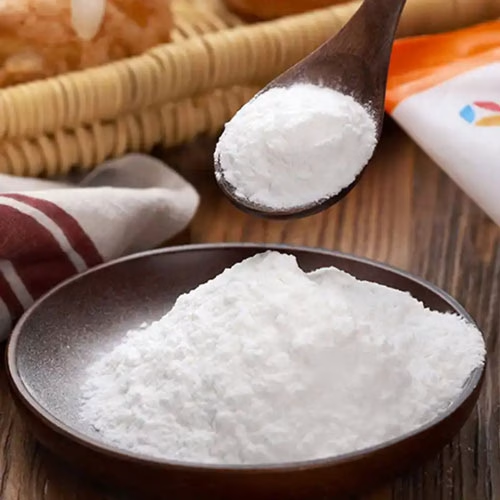
The carbon dioxide gas gets trapped within the structure of the dough or batter. As more and more gas is produced, it creates tiny bubbles, much like a fizzy drink. These bubbles expand, pushing the surrounding dough or batter outward and causing it to rise. The result? A light, fluffy texture that’s a delight to bite into. Compared to other leavening agents, sodium bicarbonate offers a quick and efficient way to achieve this rise. Yeast, for example, is a living organism that ferments sugars to produce carbon dioxide over time, which is great for bread-making but requires longer proofing periods. Baking powder, which often contains sodium bicarbonate along with an acid, also leavens but might have a different flavor profile and reaction rate. Sodium bicarbonate, on its own, gives bakers precise control over when and how much gas is released, depending on the recipe and baking temperature.
pH Regulation: Balancing Act in Baking
Beyond its leavening superpower, sodium bicarbonate plays a vital role in regulating the pH of baked goods.
Many recipes, especially those for cakes, muffins, and quick breads, contain acidic ingredients like buttermilk, yogurt, vinegar, or citrus juices. When sodium bicarbonate comes into contact with these acids, a chemical reaction occurs that not only helps with leavening but also balances the overall acidity of the mixture.
The reaction between the bicarbonate and acid can be represented by the equation
H⁺ + HCO₃⁻ → H₂O + CO₂↑.
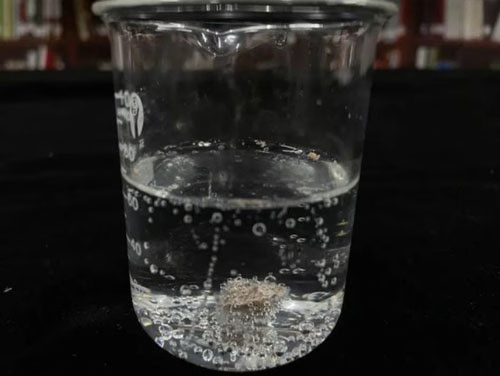
As the acid donates a hydrogen ion (H⁺) and combines with the bicarbonate, it produces water and carbon dioxide, similar to the heat-induced decomposition.
This reaction is crucial as it affects the texture, color, and flavor of the final product.
- A properly balanced pH ensures that the proteins in the flour are activated optimally, leading to a tender crumb.
- It also helps in browning reactions, as a slightly alkaline environment (after the bicarbonate reaction) promotes the Maillard reaction, which gives baked goods their appealing golden-brown hue.
- In terms of flavor, it can mellow out overly acidic ingredients and create a more harmonious taste profile. For example, in a chocolate cake recipe with buttermilk, the sodium bicarbonate neutralizes the acidity of the buttermilk, enhancing the rich flavor of the chocolate while ensuring the cake rises beautifully. Without this pH regulation, the cake might be too dense, pale, and have an unbalanced taste.
Browning and Flavor Enhancement
The use of sodium bicarbonate in baking isn’t just about making things rise; it’s also about creating that irresistible golden-brown color and rich flavor we associate with freshly baked goods. As mentioned earlier, when sodium bicarbonate reacts with acids or decomposes upon heating, it slightly alkalizes the batter or dough environment. This alkalinity is a catalyst for the Maillard reaction, a complex chemical process that occurs between amino acids and reducing sugars at elevated temperatures.
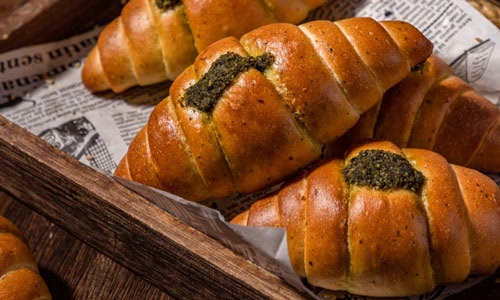
During the Maillard reaction, a cascade of flavor compounds are formed, giving baked items their characteristic nutty, caramel-like, and overall delicious taste. The browning that accompanies this reaction is not only visually appealing but also signals the development of these deep flavors. If you were to bake two batches of cookies, one with the right amount of sodium bicarbonate and the other without, you’d notice a stark difference. The ones with sodium bicarbonate would emerge from the oven with a beautiful, evenly browned exterior, while the other batch might be pale and lackluster. In terms of flavor, the sodium bicarbonate-enhanced cookies would have a more complex and satisfying taste, with layers of flavor that unfold with each bite, whereas the ones without would taste flat and one-dimensional. It truly is a game-changer in the pursuit of the perfect baked treat.
Safe Handling and Tips
While sodium bicarbonate is a baking wonder, it’s essential to handle it with care. When using it in recipes, always measure accurately. Using too much can lead to a soapy or bitter taste and an overly alkaline product that might not rise properly. As a rule of thumb, follow the recipe instructions closely. In terms of storage, keep it in a cool, dry place, sealed tightly to prevent moisture absorption. Moisture can cause the sodium bicarbonate to start reacting prematurely, losing its effectiveness.
Also, be cautious when combining it with other ingredients. For instance, avoid mixing it with acidic substances until you’re ready to bake, as the reaction will begin immediately upon contact. By following these simple tips, you can ensure that your baking adventures with sodium bicarbonate are always successful and your treats turn out as delicious as you envisioned.
Conclusion
Sodium bicarbonate truly is the unsung hero of the baking world. Its ability to leaven, regulate pH, and enhance browning and flavor makes it an indispensable ingredient for creating a vast array of delicious baked goods. From the simplest cookies to elaborate cakes, it works behind the scenes to bring that touch of magic to our taste buds. Next time you’re in the kitchen, armed with a recipe and a box of baking soda, you’ll now understand the science and art that goes into every rise and delicious bite. So, preheat that oven, measure out your ingredients carefully, and let sodium bicarbonate help you craft your own mouthwatering masterpieces. And who knows? As baking continues to evolve, perhaps we’ll discover even more fascinating uses for this humble yet remarkable compound. Until then, happy baking!
Expand reading:

