

I. Introduction
This article aims to delve deep into the reasons why sodium bicarbonate, also known as baking soda, is used in fire extinguishers.
By understanding the chemical and physical properties of sodium bicarbonate that make it an effective fire – fighting agent, we can better appreciate the science behind fire prevention and suppression.
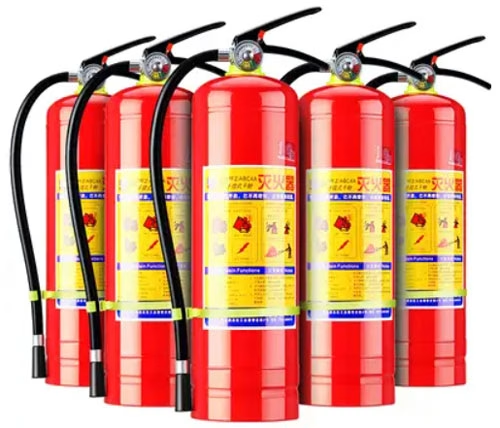
Additionally, this knowledge can help in the proper selection and use of fire extinguishers, ultimately contributing to enhanced safety in the face of fire hazards.
We will explore the chemical reactions that occur when sodium bicarbonate is deployed in a fire, its effectiveness against different types of fires, and how it compares to other common fire – extinguishing agents.
II. How Sodium Bicarbonate Works in Fire Extinguishers
Sodium bicarbonate, with the chemical formula NaHCO3, is an inorganic compound. It consists of a sodium ion (Na⁺) and a bicarbonate ion (HCO₃⁻). For detailed explanation on its properties and other applications please read: what is sodium bicarbonate.
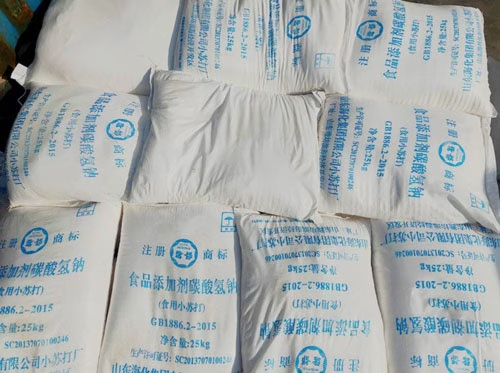
Sodium bicarbonate decomposes into carbon dioxide gas and water when exposed to high temperatures or acids, and they play a positive role in extinguishing fires.
The chemical reaction equations involved are as follows:
2NaHCO₃→Na₂CO₃ + H₂O + CO₂↑
NaHCO3+H+ →Na+ + H₂O + CO₂↑
1. Thermal decomposition reaction
The thermal decomposition of sodium bicarbonate is central to its fire – extinguishing capabilities.
The chemical reaction, 2NaHCO₃→Na₂CO₃ + H₂O + CO₂↑, occurs when sodium bicarbonate is exposed to the heat of a fire.
- This reaction is endothermic, meaning it absorbs heat from the surroundings. As the reaction proceeds, it draws heat away from the fire, contributing to the cooling effect mentioned earlier.
- The production of carbon dioxide and water during this decomposition is crucial for extinguishing the fire. The carbon dioxide provides the smothering effect by displacing oxygen, while the water cools the fire.
- Additionally, the sodium carbonate (Na2CO3) formed as a by-product can also play a role. In some cases, it can form a protective layer on the surface of the burning material, further inhibiting the combustion process. For example, in fires involving certain metals or flammable liquids, the sodium carbonate can react with the surface of the fuel or form a barrier that prevents oxygen from reaching the fuel, enhancing the overall fire – extinguishing performance of sodium bicarbonate.
Dry powder fire extinguishers utilizing this principle. They are particularly well – suited for use in industrial settings, such as factories, refineries, and automotive repair shops.
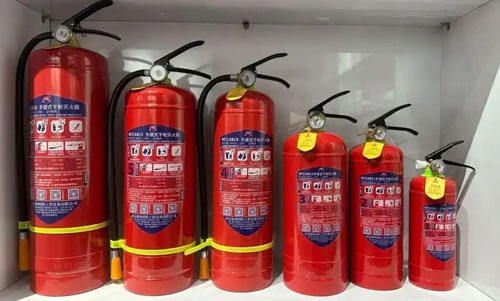
- In a factory where there are large quantities of flammable solvents or gases used in the manufacturing process, a dry chemical fire extinguisher can quickly suppress a fire and prevent it from spreading, minimizing damage to equipment and property.
- They are also commonly found in commercial kitchens, where the risk of grease fires is high. The ability of the sodium bicarbonate – based powder to effectively extinguish flammable liquid fires makes it an ideal choice for these environments.
2. Reaction with acid
By studying the equation for the reaction with the acid listed above, we find that the reaction produces twice as much carbon dioxide as the pyrolysis reaction. Foam fire extinguishers made using this principle, containing a solution of sodium bicarbonate and a separate solution of an acid – based substance, typically aluminum sulfate.
When the extinguisher is activated, the two solutions are mixed, triggering a chemical reaction. The reaction between sodium bicarbonate and aluminum sulfate produces carbon dioxide gas, water, and a thick, foamy substance. The chemical equation for this reaction is . The carbon dioxide gas is trapped within the foam, causing it to expand and become a thick, viscous substance.
The foam produced by this reaction is the key to extinguishing the fire. When the foam is applied to a fire, it blankets the fuel surface, creating a physical barrier that prevents oxygen from reaching the fuel. The foam also has a cooling effect, as the water within it absorbs heat from the fire. This combination of smothering and cooling effectively extinguishes the fire.
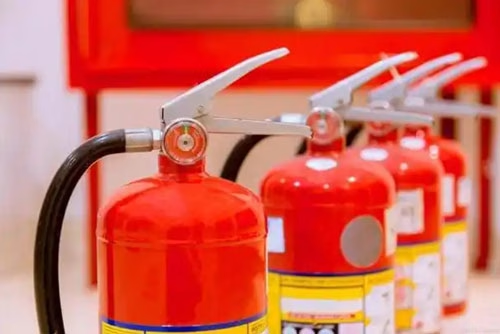
Chemical foam fire extinguishers are especially effective against Class B fires, which involve flammable liquids. In a situation where there is a gasoline spill that has caught fire, the foam from a chemical foam fire extinguisher can quickly cover the burning liquid, cutting off the oxygen supply and cooling the surface, thereby extinguishing the fire. However, they are not suitable for use on electrical fires, as the water in the foam can conduct electricity and pose a risk of electric shock to the operator.
III. Advantages of Sodium Bicarbonate in Fire Extinguishers
1. Broad – spectrum Fire – fighting Capability
Sodium bicarbonate – based fire extinguishers exhibit remarkable versatility in combating various types of fires.
Class B fires, which involve flammable liquids such as gasoline, diesel, and oil. In industrial settings like gas stations, where large quantities of flammable liquids are stored, sodium bicarbonate fire extinguishers are crucial. When discharged onto a gasoline fire, for example, the sodium bicarbonate decomposes, releasing carbon dioxide that smothers the flames. The carbon dioxide forms a dense layer over the burning liquid, preventing oxygen from reaching it and extinguishing the fire.
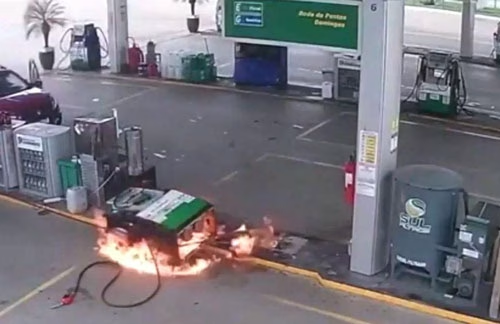
Class C fires, which are fueled by flammable gases such as natural gas, propane, and butane, can also be effectively managed with sodium bicarbonate – filled fire extinguishers. In a kitchen, if a gas leak causes a fire, the sodium bicarbonate in the extinguisher can quickly suppress the flames. As the gas is burning, the heat causes the sodium bicarbonate to decompose. The resulting carbon dioxide not only cuts off the oxygen supply but also displaces the burning gas, reducing the fuel available for the fire.
Class E fires, can be safely extinguished using sodium bicarbonate – based fire extinguishers. In offices or data centers, where electrical equipment is abundant, a small electrical fire can be a significant threat. Sodium bicarbonate’s non – conductive nature makes it suitable for such fires. When applied to an electrical fire, it smothers the flames without conducting electricity, minimizing the risk of electric shock to the operator.
2. Non – conductive Nature
The non – conductive property of sodium bicarbonate is a significant advantage when dealing with electrical fires. In modern society, where electrical appliances and equipment are omnipresent, the risk of electrical fires is ever – present. In a household, a malfunctioning electrical outlet or an overloaded power strip can ignite a fire. In industrial settings, electrical fires can occur in machinery, control panels, or electrical distribution systems.
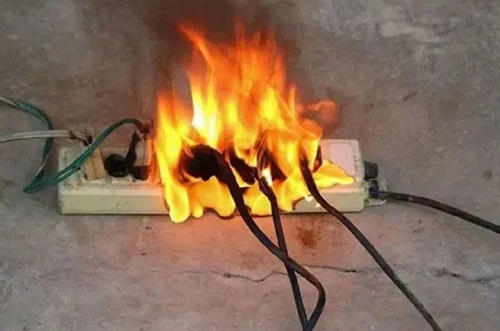
When using a sodium bicarbonate – based fire extinguisher on an electrical fire, the operator can be confident that they are not at risk of being electrocuted. The dry powder of sodium bicarbonate does not conduct electricity, unlike water – based extinguishers. Water is a good conductor of electricity, and using a water – based extinguisher on an electrical fire can lead to the spread of electricity, endangering the lives of those attempting to extinguish the fire. Sodium bicarbonate’s non – conductive nature allows for a safe and effective means of suppressing electrical fires, protecting both property and lives.
3. Ease of Storage and Handling
Sodium bicarbonate is a highly stable compound, which makes it easy to store in fire extinguishers for extended periods. It does not degrade or react with the materials of the extinguisher container under normal conditions. Fire extinguishers filled with sodium bicarbonate can be stored in a variety of environments, from the cool, dry conditions of a residential garage to the more humid and variable conditions of an industrial warehouse.
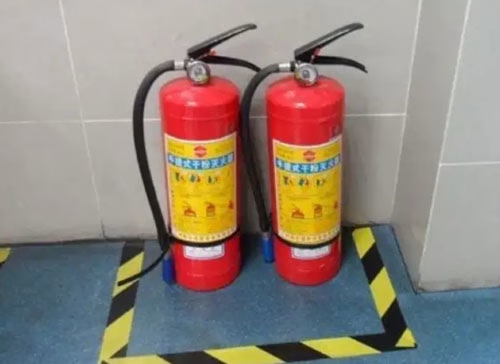
The storage requirements for sodium bicarbonate – based fire extinguishers are relatively simple. They do not require special temperature – controlled environments or complex storage arrangements. As long as the extinguisher is kept in a location where it is easily accessible in case of a fire and is not exposed to extreme temperatures or physical damage, it will remain in good working condition.
Handling sodium bicarbonate – filled fire extinguishers is also straightforward. They are typically designed to be lightweight and easy to maneuver, whether it is a small handheld extinguisher for home use or a larger, wheeled extinguisher for industrial applications. The simplicity of storage and handling makes sodium bicarbonate – based fire extinguishers a practical choice for a wide range of settings.
4. Environmentally Friendly Aspect
Sodium bicarbonate is considered an environmentally friendly fire – fighting agent. When it decomposes during the fire – extinguishing process, the by – products are sodium carbonate, water, and carbon dioxide. Sodium carbonate is a relatively harmless compound that can be easily disposed of. It does not pose a significant threat to the environment.

The water produced is a natural substance and does not cause pollution. Carbon dioxide, although a greenhouse gas, is released in relatively small amounts during the fire – extinguishing process. In comparison to some other fire – extinguishing agents, such as certain halon – based chemicals that can damage the ozone layer, sodium bicarbonate has a much lower environmental impact.
After a fire is extinguished using sodium bicarbonate, the clean – up process is relatively easy. The residues left behind can be easily removed without the need for special environmental remediation measures. This makes sodium bicarbonate a sustainable choice for fire – fighting, especially in environments where environmental protection is a priority, such as nature reserves, parks, or environmentally sensitive industrial areas.
IV. Limitations of Sodium Bicarbonate in Fire Extinguishers
1. Ineffectiveness Against Certain Fire Types
Despite its many advantages, sodium bicarbonate – based fire extinguishers have significant limitations when it comes to specific fire types.
Class D fires, which involve combustible metals such as magnesium, titanium, and potassium. These metals burn at extremely high temperatures and react violently with many common fire – extinguishing agents.
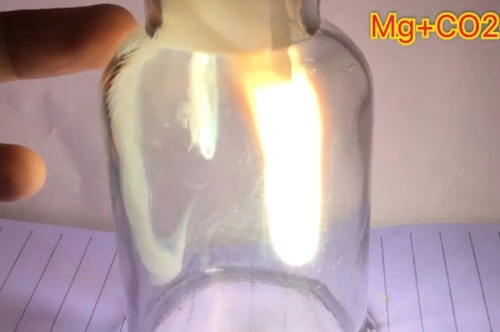
In the case of a magnesium fire, for example, the high – temperature combustion of magnesium can break down the carbon dioxide produced by the decomposition of sodium bicarbonate. The magnesium can react with the carbon dioxide, extracting oxygen from it and continuing to burn.
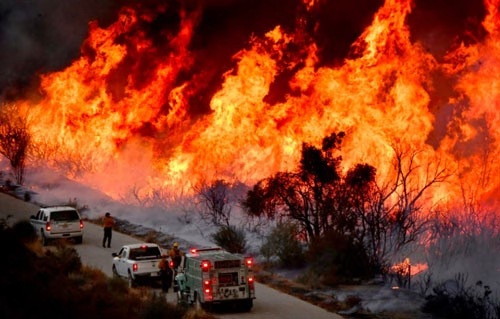
Class A fires, which involve ordinary combustibles like wood, paper, and cloth. These fires require a large amount of water to cool the burning materials and prevent re-ignition effectively. While the water produced during the decomposition of sodium bicarbonate may have a minor cooling effect, it is not sufficient to completely extinguish a Class A fire. The porous nature of materials like wood allows the fire to penetrate deep within, and the limited amount of water from sodium bicarbonate decomposition cannot reach all the burning areas.
2. Residue and Clean-up Issues
Another drawback of using sodium bicarbonate in fire extinguishers is the residue left behind after extinguishing a fire. When sodium bicarbonate decomposes, it forms sodium carbonate, which can leave a white, powdery residue on the surfaces where it was discharged. This residue can be difficult to clean, especially if it has come into contact with sensitive equipment, electronics, or delicate surfaces.
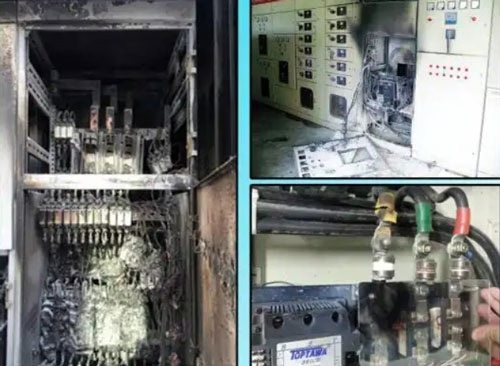
In a data center, for instance, if a sodium bicarbonate – based fire extinguisher is used to put out a small electrical fire, the residue can seep into the servers and other electronic devices. The sodium carbonate residue can be corrosive over time, potentially damaging the internal components of the equipment. Cleaning this residue requires careful disassembly of the devices and the use of specialized cleaning agents to ensure that no damage is caused during the cleaning process.
V. Comparison with Other Fire-extinguishing Agents
1. Water-based Agents
One of the primary advantages of water-based fire-extinguishing agents is its excellent cooling capacity when compared to sodium bicarbonate based fire extinguishers. This makes it highly effective against Class A fires, which involve ordinary combustibles like wood, paper, and cloth.
Water-based fire-extinguishing agent is not suitable for fires involving flammable liquids (Class B fires) or electrical equipment (Class E fires).
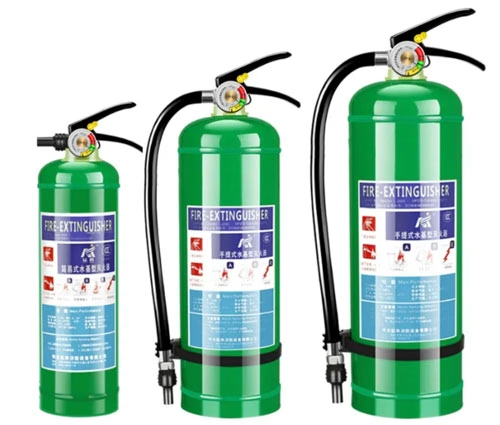
When water is applied to a flammable liquid fire, such as gasoline or oil, it can cause the liquid to spread, potentially making the fire worse.
In the case of electrical fires, water is a conductor of electricity. It can lead to electric shock hazards for the operators and damage the electrical equipment.
In contrast, sodium bicarbonate based fire extinguishers can be used on some electrical fires due to their non – conductive nature, and they are effective against flammable liquid fires by smothering the flames with carbon dioxide.
2. Pure Carbon Dioxide Agents
Carbon dioxide extinguishers are highly effective for fires involving flammable liquids, gases, and electrical equipment. For example, in a data center, a carbon dioxide extinguisher can quickly suppress an electrical fire without leaving any residue that could damage the sensitive electronics.
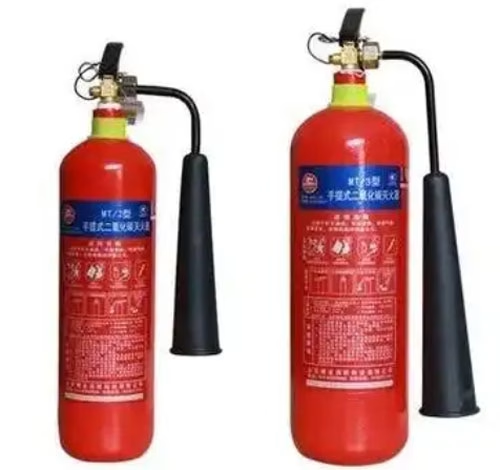
One advantage of carbon dioxide extinguishers is that they do not leave behind any residue after use. This is particularly beneficial in environments where residue could cause damage or contamination, such as in museums, art galleries, or cleanrooms.
However, carbon dioxide extinguishers have shorter range of effectiveness than sodium bicarbonate based fire extinguishers. This means that the operator needs to be relatively close to the fire to effectively use the extinguisher.
Additionally, carbon dioxide can be dangerous to humans in high concentrations in an enclosed space. Sodium bicarbonate based fire extinguishers are generally safer for humans in terms of immediate asphyxiation risk.
VI. Conclusion
1. Recap of Key Points
Sodium bicarbonate’s application in fire extinguishers is rooted in its unique chemical and physical properties. Its thermal decomposition, which releases carbon dioxide and water, is the cornerstone of its fire – extinguishing mechanisms. The carbon dioxide provides a smothering effect by displacing oxygen, while the water contributes to cooling the fire.
The advantages of sodium bicarbonate in fire extinguishers are manifold. It has a broad – spectrum fire – fighting capability, being effective against Class B, C, and some Class E fires. Its non – conductive nature makes it a safe choice for electrical fires, reducing the risk of electric shock. Easy storage and handling, along with its environmentally friendly profile, further enhance its appeal. Different types of fire extinguishers, such as dry chemical and chemical foam fire extinguishers, utilize sodium bicarbonate in their designs, each with its own mechanism for delivering the sodium bicarbonate to the fire.
However, sodium bicarbonate – based fire extinguishers are not without limitations. They are ineffective against Class A and Class D fires, and the residue left behind after use can pose clean – up challenges, especially in sensitive environments. When compared to other fire – extinguishing agents like water – based and carbon dioxide agents, sodium bicarbonate has its own set of advantages and disadvantages, highlighting the importance of choosing the right fire – fighting agent for different fire scenarios.
2. Future Outlook
As technology advances, there is potential for the development of more efficient sodium bicarbonate based fire fighting formulations. Research could focus on enhancing its fire – extinguishing capabilities, perhaps by optimizing the particle size of the sodium bicarbonate powder in dry chemical extinguishers to improve its spread and effectiveness. This could lead to faster fire suppression and better protection of lives and property.
Additionally, with the increasing focus on smart and connected technologies, there could be opportunities to integrate sodium bicarbonate – based fire extinguishers into intelligent fire – detection and – suppression systems. These systems could be designed to detect fires more quickly and accurately deploy the sodium bicarbonate – based extinguishers, improving the overall response to fire emergencies.
Expand reading:
Why is sodium bicarbonate used in photosynthesis experiment.

