

Removing scale from boiler and pipes is one of the trisodium phosphate uses. But if you can’t get the right ratios and methods of use, its effectiveness will be greatly reduced.
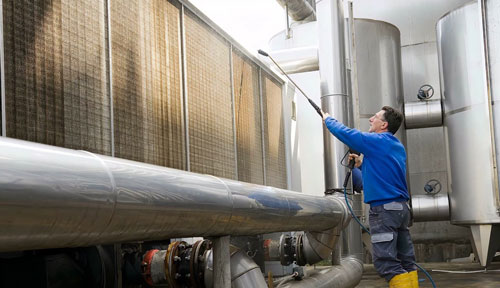
I. Here’s how to clean scale with trisodium phosphate:
1. Check and prepare:
Check the condition of the boiler to be treated to ensure that the water level is high enough for the effective use of trisodium phosphate. Make sure wear protective gloves and goggles to prevent direct contact of trisodium phosphate with skin and eyes.
2. Calculate the dosage:
Calculate and add trisodium phosphate according to the water volume. The general concentration is, 2-3 grams of trisodium phosphate per cubic meter of water.
3. Heating to dissolve:
After adding trisodium phosphate, heat the boiler to raise the water temperature to 80-90℃, so that the trisodium phosphate can dissolve better and make it can remove the sediment effectively. Note that trisodium phosphate is easy to decompose under high temperature, so long time high temperature heating should be avoided.
4. Regular checking and replenishing:

During the heating process, the water level in the boiler should be checked regularly, if the water level is too low, the water should be replenished in time to prevent the boiler from being damaged.
5. Observe the effect:
The descaling effect of trisodium phosphate usually takes 2-3 hours, in the middle of which you can check the deposits in the boiler regularly to observe whether it is effectively removed.
6. Cleaning:
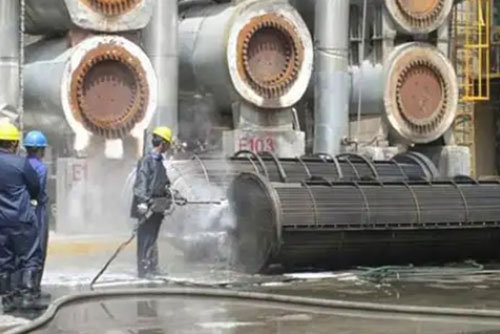
When the descaling effect of trisodium phosphate is completed, the heating should be stopped. Clean deposits of the boiler off.
7. Residual treatment:
Clean the residual trisodium phosphate inside the boiler or container with clean water to prevent it from causing harm to human health.
II. Caution:
Trisodium phosphate is considered to be harmful when excessive exposure.
- Trisodium phosphate is a kind of alkaline substance, when using it, attention should be paid to the compatibility with acidic and acidic substances to avoid producing harmful gas or reducing the washing effect.
- Trisodium phosphate should be stored in a cool and dry place before using. Ensure that the storage space is ventilated, away from open flames and heat sources, well sealed, tightly packed, try to avoid contact with the air, reduce its contact with the air.
- Keep the package away from moisture and sunlight. Try to avoid contact with acids, and it is best to store it separately from acid products.
- Try to lift and put it gently to avoid rupture of container or package.
III. Accidental Exposure Treatment:
- If trisodium phosphate is inadvertently introduced into the eyes, immediately turn the upper and lower eyelids by hand, flush with running water or saline for at least 15 minutes, and go to the hospital immediately for medical advice on subsequent treatment.
- In case of skin contact, immediately remove contaminated clothing, wash with plenty of running water and seek medical attention.
IV. Conclusion
Trisodium phosphate is a commonly used scale remover, and its correct use can effectively accomplish the cleaning of boilers as well as pipes. Controlling the concentration, temperature and regular checking is the key to ensure the effectiveness of use. In addition, it should also be noted that trisodium phosphate needs to be sealed, moisture-proof, sun-proof, and not in contact with acids before use. In case of inadvertent eye or skin contact with the chemical, you need to immediately flush with water and seek immediate medical attention.

