

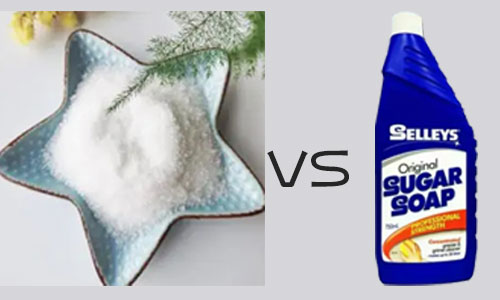
I. Introduction to Trisodium Phosphate and Sugar Soap
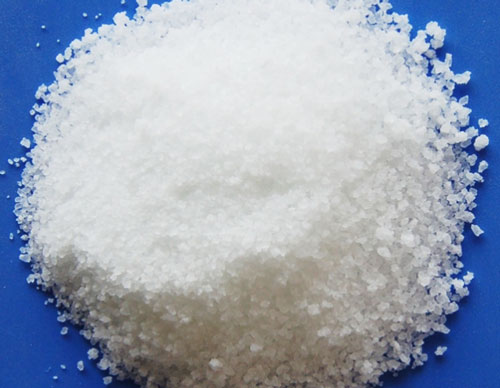
Trisodium phosphate is the tertiary phosphate of sodium used as a builder in soaps and detergents. It is a colorless to white crystalline or crystalline powder that is soluble in water and has a strongly alkaline aqueous solution(Please read article “what is trisodium phosphate” for its detailed introduction).
Sugar soap, on the other hand, is a type of alkaline cleaner. While not as widely known as trisodium phosphate in industrial applications, it is commonly used for cleaning surfaces before painting or for general household cleaning.
Sugar soap is often preferred for certain cleaning tasks due to its milder nature compared to some industrial cleaners. It is effective in removing dirt and grime from surfaces without being overly harsh.
So, trisodium phosphate and sugar soap are two distinct substances with their own sets of properties and applications, playing important roles in various industries and household cleaning.
II. Chemical Properties and Composition
A. Trisodium Phosphate’s Characteristics
Trisodium phosphate has several distinct chemical properties( to find detailed properties please check article “What are the trisodium phosphate properties”). It is highly alkaline with a pH that can range from around 11.5 to 12.5. This strong alkalinity gives it the ability to react with acidic substances and neutralize them. Trisodium phosphate is soluble in water, forming a clear solution. When dissolved in water, it dissociates into sodium ions (Na⁺) and phosphate ions (PO₄³⁻). This property makes it useful in various applications where water softening is required.
B. Sugar Soap’s Makeup
Sugar soap is typically composed of a combination of surfactants, alkaline agents, and water.
The alkaline nature of sugar soap gives it its cleaning power. It is milder compared to some industrial cleaners due to its lower alkalinity. Sugar soap often contains ingredients such as potassium hydroxide or sodium hydroxide, which contribute to its cleaning action. These substances help break down dirt, grease, and grime on surfaces. Sugar soap also contains surfactants that help lower the surface tension of water, allowing it to spread more easily and penetrate dirt more effectively. One of the unique features of sugar soap is its ability to clean surfaces without leaving a harsh residue. This makes it suitable for use on a variety of surfaces, including walls, ceilings, and woodwork, before painting or for general household cleaning tasks.
III. Functions and Applications
A. Trisodium Phosphate’s Uses
Trisodium phosphate has a wide range of functions and applications. In the industrial sector, it is commonly used as a water softener. For example, in boiler systems, it helps prevent the formation of scale by reacting with calcium and magnesium ions in hard water to form insoluble precipitates that can be easily removed. This not only improves the efficiency of the boiler but also extends its lifespan.

It is also used as a detergent builder, enhancing the cleaning power of detergents by increasing the solubility of dirt and oils. In the food industry, trisodium phosphate is used as a preservative and emulsifier. It can help maintain the texture and stability of processed foods. Additionally, it is used in the production of ceramics and glass, where it acts as a flux to lower the melting point of the materials.
Trisodium phosphate is also employed in metal treatment processes. It can be used as a rust inhibitor by forming a protective layer on metal surfaces. In the textile industry, it is used for fabric mercerization, improving the strength and dyeability of fabrics.
B. Sugar Soap’s Purposes
Sugar soap is mainly used for cleaning purposes. It is often used to prepare surfaces for painting. By removing dirt, grease, and grime, it provides a clean surface for paint to adhere to. This helps ensure a smooth and durable finish.
In household cleaning, sugar soap is effective in cleaning walls, ceilings, and woodwork. It can remove stains, marks, and grime without damaging the surface. It is also suitable for cleaning vinyl and linoleum floors.
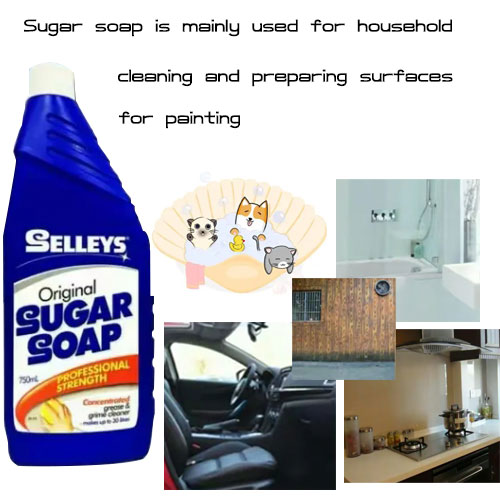
Sugar soap is milder than many industrial cleaners, making it a safer option for use around children and pets. It is also less likely to cause skin irritation or respiratory problems. Additionally, sugar soap is often used in the restoration of old furniture and antiques, as it can gently clean and prepare the surface for refinishing.
IV. Differences and Similarities
A. Chemical Differences
Trisodium phosphate is a specific chemical compound with a defined chemical formula of Na3PO4. It is highly alkaline and composed mainly of sodium, phosphorus, and oxygen atoms.
On the other hand, sugar soap is a mixture of surfactants, alkaline agents like potassium hydroxide or sodium hydroxide, and water. While both have alkaline properties, trisodium phosphate has a much stronger alkalinity with a pH ranging from around 11.5 to 12.5. Sugar soap is milder in terms of alkalinity. Trisodium phosphate’s chemical structure gives it specific properties such as the ability to react with calcium and magnesium ions to form insoluble precipitates, making it effective as a water softener. In contrast, sugar soap’s chemical makeup is designed for general cleaning purposes and does not have the same specific water softening capabilities.
B. Usage Similarities and Differences
In some respects, trisodium phosphate and sugar soap share certain usage similarities. Both can be used for cleaning purposes.
However, their applications differ significantly in many scenarios.
Trisodium phosphate is widely used in industrial settings such as in boiler systems to prevent scale formation, as a detergent builder to enhance cleaning power, and in various industries like food, ceramics, glass, metal treatment, and textiles. In the food industry, it serves as a preservative and emulsifier.
Sugar soap, on the other hand, is mainly used for household cleaning and preparing surfaces for painting. It is milder and safer for use around children and pets.
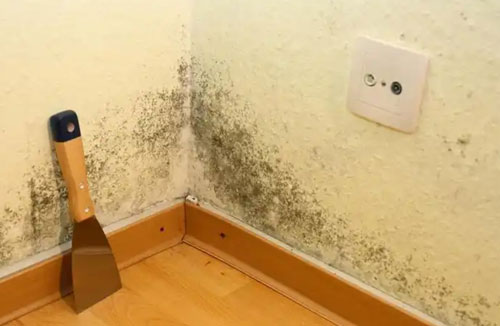
While trisodium phosphate is more powerful and has specific industrial applications, sugar soap is preferred for its gentleness and ability to clean without leaving a harsh residue. For example, when cleaning walls and ceilings before painting, sugar soap is often the go-to choice due to its mild nature. In industrial processes where heavy-duty cleaning (for example remove the mold from wall, see article “Does trisodium phosphate kill mold?” ) or water softening is required, trisodium phosphate is more suitable.
V. Conclusion
In conclusion, trisodium phosphate and sugar soap are clearly not the same. Trisodium phosphate is a specific chemical compound with a defined chemical formula and strong alkaline properties. It has a wide range of industrial applications, including water softening, detergent building, food preservation and emulsification, ceramic and glass production, metal treatment, and textile mercerization.
On the other hand, sugar soap is a mixture of surfactants, alkaline agents, and water. It is milder in alkalinity and is mainly used for household cleaning and preparing surfaces for painting. It is safer for use around children and pets and leaves no harsh residue.
Both substances have their own unique chemical compositions and functions. Trisodium phosphate’s chemical structure gives it specific properties that make it useful in industrial processes. Sugar soap’s makeup is designed for general cleaning purposes and is preferred for its gentleness.
In summary, although both trisodium phosphate and sugar soap have some cleaning capabilities, they are distinct substances with different chemical properties and applications. They cannot be considered the same.

