

I.Introduction
Trisodium phosphate is a non-hazardous material and a general chemical. Its aqueous solution is strongly alkaline, if the chemical reagent Na3PO4 is directly dissolved in water its strong alkaline corrosive. Its corrosiveness is related to the concentration of its aqueous solution, the higher the concentration, the greater the corrosiveness, for example, the concentration of medical Na3PO4 is very small, it can be injected, treatment of neurodermatitis, chronic eczema and so on.
II.Properties
A. Appearance:
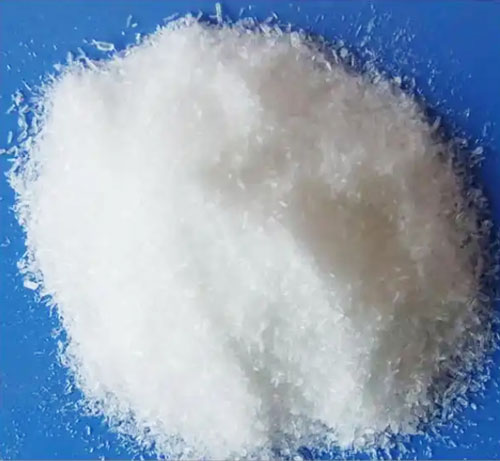
Trisodium phosphate is colorless to white needle-like crystal or crystalline powder, odorless and tasteless.
B. Solubility:
Trisodium phosphate solubility in water is very good, but insoluble in organic solvents such as ethanol and carbon disulfide. Its aqueous solution is strongly alkaline, and the pH value of 1% aqueous solution is between 11.5~12.1.
C. Melting point and density:
The melting point of the anhydrous is 1340°C, while that of the dodecahydrate is 73.4°C. The density of anhydrous trisodium phosphate is about 1.62g/cm³.
D. Deliquescence:
Trisodium phosphate is susceptible to deliquescence and weathering in dry air, producing sodium dihydrogen phosphate and sodium bicarbonate. But in water, it decomposes almost completely into disodium hydrogen phosphate and sodium hydroxide. Thanks to this property, trisodium phosphate could be used in food industry.
E. Decomposition by heating:
Trisodium phosphate loses different amounts of water of crystallization at different temperatures. It becomes decahydrate when heated to 55-65°C, hexahydrate when heated to 60-100°C, monohydrate when heated above 100°C, and anhydrous when heated above 212°C.
F. Corrosivity:
Trisodium phosphate is corrosive and can corrode metals, wood, cellulose and other substances. It could kill the mold. So, trisodium phosphate cleaner is widely used for hard surface material cleaning, such as metal, floors, walls, etc.
III. Precautions for use

- When using trisodium phosphate, always wear necessary safety equipment, such as protective gloves, masks, goggles, etc. to avoid direct contact.
- During storage and transportation of trisodium phosphate, it should be placed in airtight storage devices.
- In case of direct contact with trisodium phosphate, rinse with water immediately.
- When using trisodium phosphate, observe the safe operation procedures and strictly control its dosage.
III. Conclusion
As an inorganic salt, trisodium phosphate has unique properties, and Because it is deliquescent, we should pay attention to sealing during storage and transportation. As it has certain corrosive properties, we need to avoid direct contact to ensure our safety.

