

I.Introduction
Cetylpyridinium chloride and sodium fluoride are two substances with distinct properties and applications. Comparing these two compounds is of significant importance for several reasons. This article aims to provide a comprehensive analysis of cetylpyridinium chloride and sodium fluoride, exploring their characteristics, uses, and potential impacts.
Cetylpyridinium chloride, often abbreviated as CPC, is a cationic surfactant with a wide range of applications. It is known for its antimicrobial properties and is commonly found in products such as mouthwashes, eye drops, and buccal tablets. On the other hand, sodium fluoride is an inorganic compound with important roles in various fields, including dentistry, agriculture, and chemistry.
The scope of this article is to examine and contrast the properties and applications of cetylpyridinium chloride and sodium fluoride. By understanding the differences and similarities between these two substances, we can gain a better understanding of their potential uses and limitations. The purpose of this article is to provide valuable information for researchers, professionals, and consumers who are interested in these compounds.
II.Cetylpyridinium Chloride
A.Properties
Cetylpyridinium chloride, often abbreviated as CPC, is a cationic surfactant with distinct physical and chemical properties. In terms of appearance, it is a solid substance. CPC has limited solubility in certain solvents such as acetone and acetic acid. However, it is soluble in water and some other solvents.
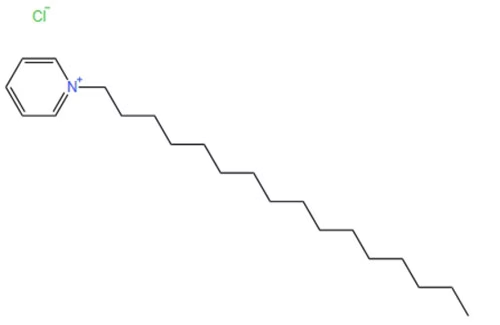
The stability of cetylpyridinium chloride is relatively high at room temperature. It exists in a stable crystalline form. The compound has a specific melting point range. The anhydrous form has a melting point of 77 °C, while the form with one molecule of water of crystallization melts at around 80–83 °C. CPC has a characteristic odor similar to pyrimidine. It is also flammable, and concentrated solutions can be harmful to mucous membranes. In case of accidental ingestion, it is toxic. When inhaled, it is very toxic. Additionally, it can cause irritation to the skin.
B.Applications
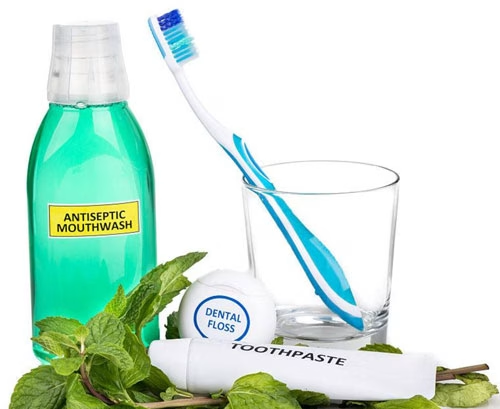
Cetylpyridinium chloride has a wide range of applications. One of its important uses is in oral care products. It is commonly found in mouthwashes, where it acts as an antimicrobial agent. By killing bacteria and other microorganisms, it helps prevent plaque buildup and reduces gingivitis. CPC is also present in some toothpastes, buccal tablets, and other dental products.
In addition to oral care, cetylpyridinium chloride is used in other products such as eye drops. It can also be found in some nasal sprays and throat sprays. Moreover, CPC has applications in the field of pesticides as an antimicrobial agent.
III.Sodium Fluoride
To know the introduction of sodium fluoride please read the related articles listed below:
We could find that it is mainly the toothpaste grade sodium sodium fluoride playing the roles as decay proof active ingredient in the oral healthcare products.
VI.Comparison
A.Similarities
Both cetylpyridinium chloride and sodium fluoride have applications in healthcare and personal care products. Cetylpyridinium chloride is found in oral care products like mouthwashes and toothpastes, as well as in eye drops and nasal sprays. Sodium fluoride is also used in dentistry for treating osteoporosis, Paget’s disease of bone, and preventing dental caries.
B.Differences
- Toxicity: Cetylpyridinium chloride is toxic if ingested or inhaled and can cause irritation to the skin. Sodium fluoride is also toxic in large doses. However, excessive use of sodium fluoride can lead to dental fluorosis, while cetylpyridinium chloride has a lower risk of such adverse effects when used as directed.
- Effectiveness: Cetylpyridinium chloride is effective in preventing plaque buildup due to its antimicrobial properties. It may have a broader spectrum of antimicrobial activity and a longer-lasting effect compared to sodium fluoride. Sodium fluoride acts directly on bone cells and combines with the hydroxyapatite crystals of bones or teeth to enhance their hardness and increase acid resistance and anti-caries ability.
- Cost: The cost of these two compounds may vary depending on their purity, source, and application. Generally, sodium fluoride is a widely available and relatively inexpensive compound due to its multiple applications in different fields. Cetylpyridinium chloride may be more expensive due to its specific applications in healthcare and personal care products.
V.Conclusion
The comparison between CPC and sodium fluoride revealed several similarities and differences. Both substances have applications in healthcare and personal care products. However, they differ in toxicity, effectiveness, and cost.
The implications of this comparison are significant. For researchers and professionals in the fields of chemistry, medicine, and agriculture, understanding the properties and applications of CPC and sodium fluoride can help in the development of new products and treatments. Consumers can also make more informed decisions about the products they use, considering the potential benefits and risks of these substances.
In conclusion, cetylpyridinium chloride and sodium fluoride are two important compounds with distinct properties and applications. By continuing to study and compare these substances, we can further expand our knowledge and improve the effectiveness and safety of products that utilize them.
Related contrast:

