

I. Introduction
In our daily lives, we are constantly surrounded by various chemical substances that play crucial roles, yet some are so common that we often take them for granted or even overlook them entirely. Calcium hydrogen phosphate is one such compound. It quietly exists in many aspects of our lives, from the food we eat to the products we use for personal care, and even in the fertilizers that help our plants grow. For instance, when you enjoy a delicious piece of biscuit that has a perfect texture and taste, or when you brush your teeth with a smooth and effective toothpaste, there’s a good chance that calcium hydrogen phosphate is working behind the scenes. But how much do we really know about this unassuming yet significant substance? Let’s dive in and explore it together.
The main aim of this article is to offer a comprehensive introduction to calcium hydrogen phosphate. We will cover its various properties, such as its physical and chemical characteristics that make it unique. Additionally, we’ll explore the wide range of uses it has in different fields including food, medicine, and agriculture. Moreover, we’ll also take a look at the common production methods through which this important compound is manufactured. By the end of this article, readers will have a clear and in-depth understanding of what calcium hydrogen phosphate truly is and why it holds such importance in our daily lives and numerous industries.
II. Chemical Basics of Calcium Hydrogen Phosphate
A. Molecular Formula and bynames
Calcium hydrogen phosphate has the molecular formula of CaHPO4.
It has a lot of bynames, such as:
- Calcium perphosphate, ammonified, granular.
- Dibasic calcium phosphate.
- Calcium hydrogenphosphate dihydrate.
- Calcium hydrogenphosphate dihydrate.
- Calcium phosphate (CaHPO4) dihydrate.
- Calcium phosphatedihydrate.
- Monohydrogen monocalciumphosphate dihydrate.
- Parmcompress.
- Tri-Compress.
These aliases provide different nomenclature to help identify Calcium Hydrogen Phosphate accurately in different contexts.
B. Chemical Attributes
- Physical State
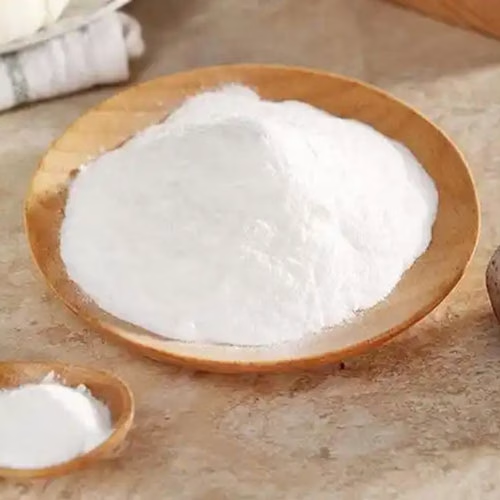
Dibasic calcium phosphate typically appears as a white crystalline or crystalline powder. It is a colorless crystal that usually exists in anhydrous form and its aqueous solution is acidic. Its relative density is about 2.306 (at 16℃). In the air, calcium hydrogen phosphate is relatively stable under normal conditions.
- Solubility
Calcium hydrogen phosphate shows different solubility behaviors in various substances. It is soluble in dilute hydrochloric acid, nitric acid, and acetic acid. When it comes in contact with these acids, it reacts and dissolves. For instance, in dilute hydrochloric acid, chemical reactions take place that break down the compound and allow it to disperse in the solution. However, its solubility in water is limited. Only a small amount of it can dissolve in water at normal temperatures and pressures. On the other hand, it is insoluble in ethanol. Ethanol, which is a common organic solvent, has no ability to dissolve calcium hydrogen phosphate. So, if you were to try to dissolve it in ethanol, you would find that it remains as a solid and doesn’t mix with the ethanol at all.
III. Various Uses of Calcium Hydrogen Phosphate
A. In Food Industry
- As a Fortifier and Leavening Agent
Calcium hydrogen phosphate plays a significant role in the food industry, especially as a fortifier and leavening agent. In many food products like biscuits and infant formula foods, it is used to supplement calcium. For instance, in biscuits, it not only enriches the calcium content but also helps in improving the texture and quality of the final product. In infant formula foods, it is crucial as it provides the necessary calcium for the healthy growth and development of infants.

According to relevant regulations, there are permitted maximum usage amounts for calcium hydrogen phosphate in different food items to ensure food safety and proper nutritional balance. For example, in certain types of baked goods, the maximum amount might be set at a specific percentage based on the total weight of the product. This careful regulation helps to prevent over-fortification and any potential adverse effects while maximizing the benefits it can bring to the food.
- Other Food Applications
It also serves as a quality improver for fermented flour products. In the process of fermentation, it can interact with other ingredients to enhance the flavor, texture, and overall quality of the products. For biscuits and substitute dairy products, it acts as a loosening agent, making the products lighter and more palatable.
When it comes to bread making, calcium hydrogen phosphate can function as a yeast culture agent. It provides an appropriate environment for yeast growth and activity, which in turn affects the rising and final texture of the bread. Without it, the bread might not have the desired fluffiness and volume.
B. In Animal Feed
In the field of animal feed, calcium hydrogen phosphate is highly valuable. For poultry, it helps with the digestion of feed. It makes the nutrients in the feed more accessible to the birds, enabling them to absorb and utilize them more efficiently. This improved digestion often leads to better weight gain among the poultry.

Moreover, it has significant benefits in increasing meat, milk, and egg production. For livestock that are raised for meat, the proper supplementation of calcium hydrogen phosphate can contribute to better muscle development and overall growth, resulting in higher meat yields. In dairy animals, it aids in maintaining good health and increasing milk production by ensuring an adequate supply of calcium and other essential elements (click to find how much calcium in dibasic calcium phosphate ).For egg-laying hens, it helps in forming stronger eggshells and can also enhance the quantity and quality of eggs produced.
It also has a role in treating certain livestock diseases. In some cases where animals have calcium or phosphorus deficiencies, the addition of calcium hydrogen phosphate to their feed can help correct these imbalances and improve their health conditions.
C. In Medicine
In the medical field, calcium hydrogen phosphate has several important uses. It is commonly used as a tablet filler. Many tablets need an inert substance to give them the right shape, size, and weight, and calcium hydrogen phosphate fits this role well as it is safe and has appropriate physical properties for formulation.

It also acts as an adsorbent in some medications. This property allows it to bind to certain substances or help in controlling the release of active ingredients in the body, thus optimizing the therapeutic effect of the drugs.
Most importantly, it serves as a crucial supplement for calcium and phosphorus deficiencies in the human body. People with certain medical conditions, poor diets, or specific age-related issues (such as the elderly or those with malabsorption problems) may have insufficient levels of calcium and phosphorus. Calcium hydrogen phosphate can be administered in appropriate forms, like in supplements or as part of fortified foods, to help address these deficiencies and maintain healthy bones, teeth, and overall physiological functions.
D. In Other Fields
- In Fertilizer
Calcium hydrogen phosphate is widely applied in fertilizers for different types of soils and various crops. In acidic soils, it can help to adjust the soil pH to a more suitable level for plant growth while also providing essential calcium and phosphorus nutrients. For example, in the cultivation of grains like wheat and rice, the addition of calcium hydrogen phosphate can enhance root development, improve the plant’s ability to resist diseases and pests, and ultimately increase crop yields.

In horticulture, for growing fruits and vegetables, it is beneficial as well. It promotes the formation of healthy and strong plant structures, and the phosphorus content is vital for processes like photosynthesis and the production of energy within the plants, ensuring better quality and quantity of the harvested produce.
- In Plastic Industry
In the plastic industry, calcium hydrogen phosphate plays the role of a plastic stabilizer. It helps to prevent the degradation of plastics due to factors like heat, light, and oxidation. By incorporating it into plastic formulations, the durability and stability of plastic products can be significantly improved. For example, in the production of plastic pipes that are exposed to sunlight and varying environmental conditions, the use of calcium hydrogen phosphate as a stabilizer can extend their lifespan and maintain their mechanical properties over time.
- In Toothpaste Manufacturing
It has a significant role as a friction agent in high-quality toothpaste. When we brush our teeth, the friction provided by the toothpaste is essential for removing plaque and debris from the tooth surfaces. Calcium hydrogen phosphate, with its appropriate particle size and hardness, can effectively perform this function without causing excessive abrasion to the enamel. In toothpaste formulations, it usually makes up a certain proportion, carefully balanced with other ingredients like fluoride, binders, and flavoring agents to create a toothpaste that is both effective in cleaning and gentle on the teeth.

VI. Conclusion
In summary, calcium hydrogen phosphate has distinct chemical properties. It appears as a white crystalline or powder, is odorless, and has specific solubility behaviors in different substances. It is relatively stable in air under normal conditions.
When it comes to its uses, it plays a multi-faceted role. In the food industry, it serves as a fortifier, leavening agent, and quality improver in various products. In animal feed, it helps with digestion and promotes the production of meat, milk, and eggs among livestock. In medicine, it acts as a tablet filler, adsorbent, and a crucial supplement for calcium and phosphorus deficiencies. Moreover, it has applications in fields like fertilizers, plastics, and toothpaste manufacturing, contributing to better plant growth, plastic stability, and effective teeth cleaning respectively.
Expand reading:

