

I.Introduction
In the health and food industry, there is a growing concern about whether dibasic calcium phosphate dihydrate (DCPD) is gluten – free. As more people are aware of the importance of gluten – free diets, especially those with celiac disease or gluten – sensitive individuals, the question of whether dibasic calcium phosphate dihydrate can be part of a gluten – free diet has come to the forefront. This compound is often used in various food products, from baking goods to processed foods, and understanding its relationship with gluten is crucial for both consumers and food manufacturers.
The purpose of this article is to explore the relationship between dibasic calcium phosphate dihydrate and gluten. By delving into the properties of dibasic calcium phosphate dihydrate, we aim to provide a comprehensive understanding of whether it can be considered gluten – free. This information will be useful for the public, especially those who are following a gluten – free diet, and for food producers who need to ensure their products meet the standards of gluten – free requirements. We hope to clarify any confusion surrounding dibasic calcium phosphate dihydrate and help people make informed decisions about their food choices.
II.Properties of Dibasic Calcium Phosphate Dihydrate
1,Basis Properties
Dibasic calcium phosphate dihydrate is a white crystalline powder with a monoclinic crystal system. It is odorless and tasteless. In terms of solubility, it is nearly insoluble in water. At 25 °C, its solubility is only 0.02 g per 100 mL of water. This property makes it an important ingredient in various food products where a stable and non – water – soluble substance is required. Its chemical formula is CaHPO4·2H2O. The compound is stable under normal conditions and has a relatively low reactivity.
2, Structure
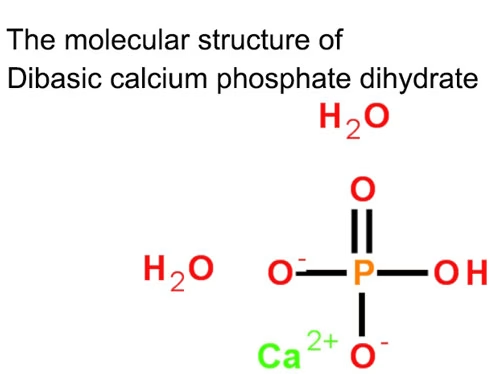
The crystal structure of dibasic calcium phosphate dihydrate is characterized by its specific crystal form. It crystallizes in a monoclinic system. The crystal lattice of dibasic calcium phosphate dihydrate consists of a network of calcium ions, hydrogen phosphate ions, and water molecules. The water molecules are incorporated into the crystal structure in a way that affects the overall shape and properties of the crystal. The crystal structure gives dibasic calcium phosphate dihydrate its unique physical and chemical properties. For example, the arrangement of the ions within the crystal lattice determines its stability and reactivity. The crystal structure also influences the way the compound interacts with other substances, which is crucial in applications such as food processing and pharmaceutical manufacturing. Related article: what is dibasic calcium phosphate dihydrate.
III.Gluten – free Aspect
1, Gluten definition
Gluten is a protein found in wheat, barley, rye, and related grains. It is composed of two main components: gliadin and glutenin. These proteins give dough its elasticity and structure. In food, gluten plays a crucial role in creating the texture and shape of bread, pasta, and other baked goods. It also acts as a binder, holding ingredients together. For people with celiac disease or gluten – sensitive individuals, gluten can cause adverse reactions such as digestive problems, inflammation, and damage to the small intestine. ( click to know more about gluten free diet)

2, Gluten and Dibasic calcium phosphate
To determine whether dibasic calcium phosphate dihydrate is gluten – free, we need to look at its chemical structure and source. Dibasic calcium phosphate dihydrate, with the formula CaHPO4·2H2O, is a mineral compound. It is not derived from wheat or other gluten – containing grains. Gluten is a complex protein made up of specific amino acid sequences. The chemical structure of dibasic calcium phosphate dihydrate does not contain gluten – like components. From its source, it is typically obtained through chemical processes and not from gluten – containing materials. Therefore, dibasic calcium phosphate dihydrate can be considered gluten – free.
IV. Applications in Food Industry
1, Food additives
In the food industry, dibasic calcium phosphate dihydrate plays a significant role as a food additive. It is commonly used as an anti – capping agent. In the production of powdered food products, such as powdered milk or flour, dibasic calcium phosphate dihydrate helps prevent the formation of clumps and ensures the free – flowing nature of the powder. This is crucial for maintaining the quality and ease of handling of these products.

2, Dietary products
Dibasic calcium phosphate dihydrate is widely used in various dietary products. One of the most common applications is in the production of calcium tablets. Calcium is an essential nutrient for the human body, and dibasic calcium phosphate dihydrate provides a convenient source of calcium. These tablets are often used by people who need to supplement their calcium intake, such as those with osteoporosis or calcium – deficiency conditions.
In addition to calcium tablets, it is also used in other dietary supplements. For instance, it can be added to fortified food products, like cereals or nutritional bars, to increase their calcium content. This helps meet the dietary requirements of individuals who may not get enough calcium from their regular diet. Moreover, dibasic calcium phosphate dihydrate can be used in the formulation of liquid dietary supplements, where it provides a stable and soluble form of calcium. The fact that it is insoluble in water makes it suitable for applications where a long – lasting release of calcium is desired.
V. Health Implications
For individuals with gluten sensitivity, dibasic calcium phosphate dihydrate can potentially cause allergic reactions. While it is not directly related to gluten, its presence in food products may trigger an allergic response in some individuals.
The allergic reaction may be more pronounced in individuals who are already sensitive to other substances. For example, those with celiac disease or other gluten – related disorders may be more likely to experience an allergic reaction. It is important for individuals with gluten sensitivity to carefully read labels and ensure that products containing dibasic calcium phosphate dihydrate are free from gluten or other potential allergens.
VI. Conclusion
In conclusion, dibasic calcium phosphate dihydrate is gluten-free. Its chemical structure and source are not related to gluten-containing grains, and it does not contain gluten-like components. This makes it a suitable ingredient for gluten-free products. However, it should be noted that individuals with gluten sensitivity may still have allergic reactions to it, although this is not due to gluten itself. Therefore, for those following a gluten-free diet, it is necessary to carefully check product labels to ensure that the product containing dibasic calcium phosphate dihydrate is free from other potential allergens.

