

Introduction
Sodium pyrophosphate with the altername of tetrasodium pyrophosphate, is an important inorganic compound that plays a significant role in the food industry. This compound, with the chemical formula Na4P2O7, is composed of sodium cations and pyrophosphate anions.
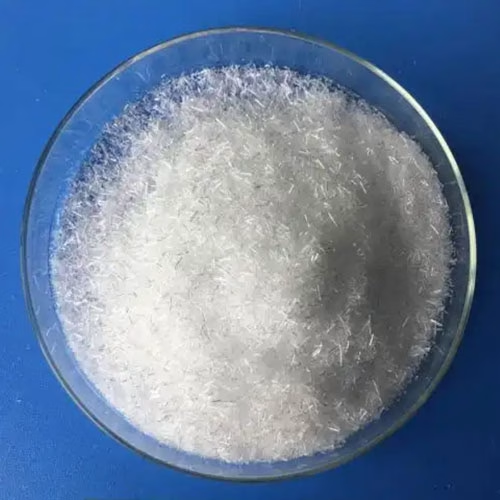
The compound also exhibits certain common properties of polymeric phosphates, including emulsifying and dispersing capabilities. Additionally, it can inhibit the oxidation and fermentation of food at high pH values. For more details, please read blog ” what is sodium pyrophosphate “.
Properties of Sodium Pyrophosphate
Reaction Mechanisms
Sodium pyrophosphate reacts with various substances in different ways.
With Metal Ions: Sodium pyrophosphate has a strong complexing ability with metal ions such as Cu2+, Fe3+, and Mn2+. It can form stable complexes with these metal ions. For example, it can react with iron ions in canned poultry products to prevent the formation of black ferric sulfide, which would otherwise affect the quality of the product.
With Alkaline Substances: In food processing, sodium pyrophosphate can react with alkaline substances. For instance, when used as a leavening agent in baking, it reacts with alkaline substances like sodium bicarbonate to produce carbon dioxide gas, causing the dough to expand and become soft and fluffy.
Uses in Food Industry
As a leavening agent
Sodium pyrophosphate acts as a crucial leavening agent in baked goods such as bread, cakes, and cookies. In the baking process, it reacts with alkaline substances, typically sodium bicarbonate. This reaction is essential for producing carbon dioxide gas. As the dough heats up, the sodium pyrophosphate and alkaline substance interact, resulting in the release of carbon dioxide. This gas gets trapped within the dough, causing it to expand and become light and fluffy. The importance of this reaction lies in its ability to give baked goods their desirable texture and volume. Without proper leavening agents like sodium pyrophosphate, bread would be dense and flat, cakes would lack their characteristic lightness, and cookies would be hard and compact.

As a Buffer Agent
In food processing, sodium pyrophosphate serves as an important buffer agent. Buffers play a crucial role in regulating the pH of food. By maintaining a relatively stable pH, sodium pyrophosphate helps to ensure the stability and quality of food products. A stable pH is essential for various chemical reactions that occur during food processing and storage. For example, it can prevent excessive acidity or alkalinity that could lead to spoilage or degradation of food. Sodium pyrophosphate helps to maintain an optimal pH range that is suitable for the activity of enzymes and other food components. This, in turn, helps to prolong the shelf life of food products and maintain their sensory qualities.
As a Metal Chelating Agent
Sodium pyrophosphate has the ability to form complexes with metal ions. This property makes it highly useful in preventing food spoilage and improving food quality. Metal ions such as iron, copper, and manganese can catalyze oxidative reactions in food, leading to spoilage and loss of quality. By forming complexes with these metal ions, sodium pyrophosphate effectively sequesters them and prevents them from participating in oxidative reactions. This helps to extend the shelf life of food products and maintain their nutritional value. Additionally, the complexation of metal ions can also improve the appearance and texture of food. For example, in canned foods, sodium pyrophosphate can prevent the formation of black ferric sulfide by chelating iron ions. This helps to maintain the quality and appearance of the canned product.
Applications in Specific Food Products
Poultry Canned Goods
Sodium pyrophosphate plays a crucial role in improving the quality of poultry canned products. In canned poultry, during heating, hydrogen sulfide can be released which can react with iron ions present in the can to form black iron sulfide. This not only affects the appearance but also the quality of the canned product. Sodium pyrophosphate acts as a chelating agent, binding with metal ions and preventing the formation of black iron sulfide. By doing so, it helps maintain the aesthetic appeal and quality of poultry canned goods.

Meat Products
In pork sausage cans and other meat products, sodium pyrophosphate is often used in combination with other phosphates. For example, a combination of sodium pyrophosphate and sodium tripolyphosphate food grade is commonly added during the processing of pork sausage cans. This combination helps in enhancing the texture and quality of the meat products. Sodium pyrophosphate acts as a chelating agent, binding with metal ions and preventing oxidative reactions that can lead to spoilage.

Cheese Products
Sodium pyrophosphate acts as a melting agent and emulsifier in cheese. It helps in enhancing the texture and properties of cheese. By acting as an emulsifier, it helps in evenly distributing the fat and water in the cheese, making it more smooth and creamy. As a melting agent, it helps in reducing the melting point of cheese, making it easier to melt and use in cooking or as a topping. The use of sodium pyrophosphate in cheese is carefully regulated to ensure that it does not exceed the safe limit and does not have any adverse effects on human health.

Soy Sauce and Bean Paste
Sodium pyrophosphate is used in soy sauce and bean paste to prevent browning and improve the color. During the production and storage of soy sauce and bean paste, browning can occur due to various chemical reactions. Sodium pyrophosphate acts as an antioxidant, preventing these reactions and maintaining the color of the products. It helps in keeping the soy sauce and bean paste looking fresh and appealing. The amount of sodium pyrophosphate used in these products is carefully controlled to ensure that it does not have any adverse effects on the taste or quality of the products.

Safety Considerations
Sodium pyrophosphate is recognized as a relatively safe food additive within certain limits. However, excessive intake may have potential adverse effects.
Additionally, the ADI value of sodium pyrophosphate is 0.70mg/kg (referring to the total amount in food and food additives, calculated in terms of phosphorus, and attention should be paid to the balance with calcium).
Conclusion
Sodium pyrophosphate plays a crucial role in the food industry. Its various uses make it an important additive in different food products.
In specific food products like poultry canned goods, it prevents the formation of black iron sulfide, maintaining the aesthetic appeal and quality. In meat products, in combination with other phosphates, it enhances texture and quality, prevents oxidative reactions, and retains moisture. In cheese products, it acts as a melting agent and emulsifier, improving texture. In soy sauce and bean paste, it prevents browning and improves color.
However, proper usage and safety precautions are necessary. Sodium pyrophosphate has certain toxicity. The oral LD50 values for mice and rats indicate its potential harm in high doses. There are safety regulations and guidelines for its use. Excessive intake may cause irritation to the eyes, respiratory system, and skin. People should be cautious about the intake of foods containing sodium pyrophosphate to avoid excessive consumption. The ADI value also needs to be considered to ensure safe consumption. In conclusion, sodium pyrophosphate is an important compound in the food industry, but its use must be carefully regulated to ensure safety and proper functionality. Safety precautions such as following regulations and guidelines, being aware of potential risks, and reading product labels can help consumers make informed choices.
Related article:

