

I.Introduction
Sodium fluoride in drinking water is a topic that has sparked much debate and discussion. This article aims to explore the various aspects of sodium fluoride in drinking water, including its definition, benefits, and risks.
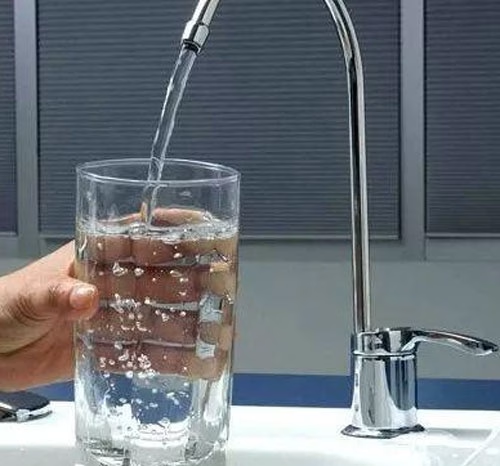
We have introduced sodium fluride definition, properties in blog “What is Sodium Fluoride?” , and know much better about its water solution from “Sodium Fluoride Dissolved in Water: Properties, Reactions, and Significance”.
In this blog, we will explain further about sodium fluoride in drinking water.
The use of sodium fluoride in drinking water has both benefits and risks. On the positive side, it can help prevent tooth decay by strengthening tooth enamel. However, there are also concerns about potential risks.
Understanding the role of sodium fluoride in drinking water is important for making informed decisions about water quality and public health. As the debate continues, further research is needed to determine the optimal levels of fluoride in drinking water to balance the benefits and risks.
II.Benefits of Sodium Fluoride in Drinking Water
Fluoride in drinking water plays a crucial role in strengthening tooth enamel. When consumed, fluoride mixes with enamel, the hard surface on teeth. This interaction helps prevent holes, or cavities, from forming.
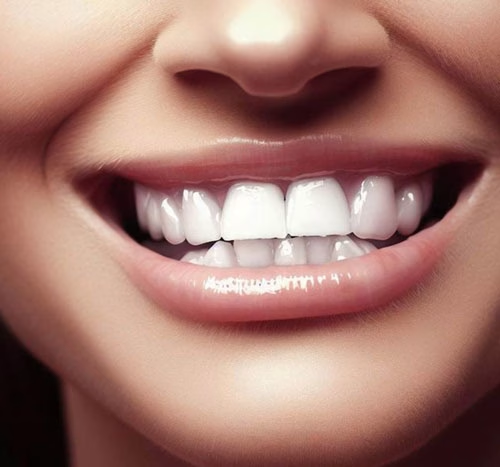
It is a proven fact that fluoride can strengthen growing teeth. At a certain stage, the tooth can repair the weakened area with the help of fluoride and minerals in saliva. Studies have shown that regular exposure to fluoride can reduce the risk of cavities in children. For example, adding fluoride to the water makes teeth resistant to the bacteria that can cause tooth decay. Fluoride can combine with the hydroxyapatite crystals of bones or teeth, replace their hydroxyl groups, and form stable inorganic salts that are not easily dissolved and absorbed, adhering to the surface and promoting the hardness of tooth enamel and bones as well as the utilization of calcium and phosphorus, thereby increasing acid resistance and preventing tooth decay.
III. What kind grade of sodium fluoride in drinking water
The toothpaste grade sodium fluoride in drinking water is typically recommended to ensure optimal levels for dental health. However, the specific grade can vary depending on local water treatment standards and regulations. Generally, the concentration of sodium fluoride in drinking water is carefully controlled to balance the benefits of preventing tooth decay without causing excessive exposure that could lead to dental fluorosis or other potential health issues.
IV. Which bottle water contains sodium floride

Not all bottled water contains sodium fluoride. Some bottled waters may be specifically marketed as fluoridated for those who seek the dental health benefits. However, it can be challenging to determine which specific brands contain sodium fluoride as it is not always prominently labeled. Consumers interested in finding bottled water with sodium fluoride may need to research individual brands or consult with dental professionals or water quality experts for recommendations.
V. How Much Sodium Fluoride is in Drinking Water?
The amount of sodium fluoride in drinking water can vary depending on different factors. Some regions add a specific amount for dental health purposes. For example, in areas where water fluoridation is implemented, the concentration of sodium fluoride is carefully regulated. The optimal level of sodium fluoride in drinking water is typically determined by considering various factors such as the local population’s dental health needs, the source of the water, and potential risks associated with excessive fluoride intake.
In some regions, the concentration of sodium fluoride in drinking water may be around 0.7 to 1.2 milligrams per liter. This level is considered beneficial for dental health as it helps prevent tooth decay. However, if the amount of sodium fluoride in drinking water exceeds a certain threshold, it may pose risks to health.
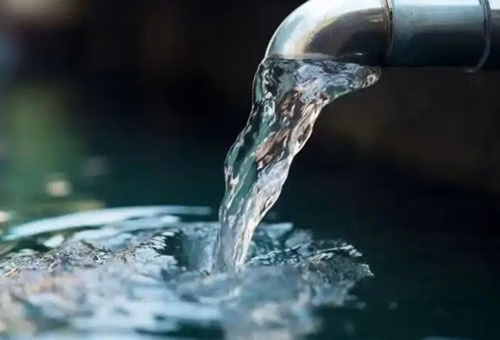
Water treatment facilities play a crucial role in controlling the amount of sodium fluoride in drinking water. They use various methods to add or remove fluoride as needed. For instance, some facilities may use fluoridation systems that add a precise amount of sodium fluoride to the water supply. On the other hand, if the natural source of water already contains high levels of fluoride, treatment processes may be employed to reduce the fluoride concentration.
It’s important to note that different countries and regions may have different standards and guidelines for the amount of sodium fluoride in drinking water. These standards are often based on scientific research and aim to balance the benefits of fluoride for dental health with the potential risks of excessive intake.
Monitoring the amount of sodium fluoride in drinking water is essential to ensure public health and safety. Regular testing and analysis of water samples help determine if the fluoride levels are within the acceptable range. If the levels are too high or too low, appropriate measures can be taken to adjust the fluoride concentration.
In conclusion, the amount of sodium fluoride in drinking water varies depending on multiple factors, and careful monitoring and regulation are necessary to ensure optimal dental health benefits while minimizing potential risks.
VI. How to remove sodium fluoride from water
There is health risk of too much fluoride in drinking water. And there are several methods for removing sodium fluoride from water.
One common method is adsorption. Activated alumina, bone char, and certain types of zeolites can be used as adsorbents to remove fluoride from water. These materials work by attracting and binding fluoride ions onto their surfaces.

Another method is precipitation. Lime or calcium chloride can be added to water to cause fluoride to precipitate out as calcium fluoride.
Ion exchange is also a possible method. Special ion exchange resins can be used to replace fluoride ions with other ions.
Reverse osmosis is another effective way to remove fluoride from water. This process uses a semipermeable membrane to filter out fluoride and other contaminants. However, reverse osmosis can be expensive and may require regular maintenance.
In addition, some water treatment plants may use chemical coagulation or electrocoagulation to remove fluoride from water. These methods involve adding chemicals or applying an electric current to cause fluoride to form larger particles that can be removed by filtration.
VII. Conclusion
Sodium fluoride in drinking water is indeed a complex issue that demands careful consideration. While it offers certain benefits, it also comes with potential risks that cannot be ignored.
On the one hand, the presence of sodium fluoride in drinking water can help prevent tooth decay by strengthening enamel. This has been a well-known benefit for many years, with fluoride being used in dental care for over a century. Additionally, the regulated addition of sodium fluoride to drinking water is a practical way to ensure a certain level of dental health for the population.
However, on the other hand, there are risks associated with sodium fluoride in drinking water. Excessive intake can lead to potential health issues such as dental fluorosis and skeletal fluorosis.
In conclusion, understanding the properties and effects of sodium fluoride in drinking water is crucial. Balancing the benefits and risks requires careful monitoring and regulation of fluoride levels in drinking water. Further research is needed to determine the optimal levels that can provide the maximum dental health benefits while minimizing potential risks.

