

I. Introduction to Sodium Hexametaphosphate
A.Chemical Properties and Appearance
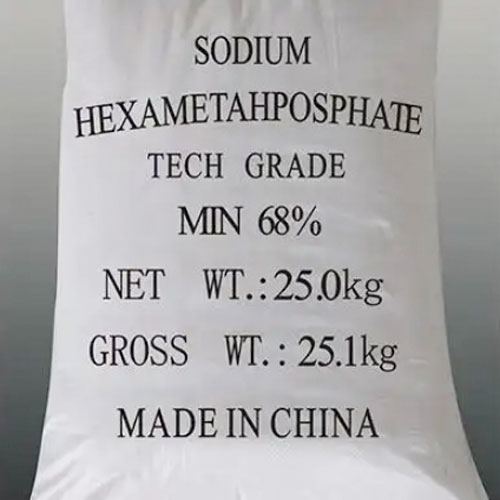
Sodium hexametaphosphate is known as a high-performance dispersant. It is an inorganic compound that appears as a white crystalline powder or transparent solid. It has a specific gravity of approximately 2.5 and a melting point of 616 °C. It is highly soluble in water, with a solubility of 973.2 g/L at 20°C. However, it is insoluble in organic solvents like ethanol and ether. This compound is highly hygroscopic and readily absorbs moisture from the air.
B. Molecular Structure
Sodium hexametaphosphate belongs to the group of polyphosphates. It has a cyclic molecular structure formed by the polymerization of amorphous water-soluble sodium metaphosphate (NaPO3) monomers. This unique structure gives it specific properties. So, sodium hexametaphosphate use in many fields, such as food, industrial, cosmetics, etc.
C. Other Name
The other name of sodium hexametaphosphate is Graham’s salt, and it is short called SHMP.
II. Preparation Methods
A. Phosphorus Pentoxide Method
The preparation of sodium hexametaphosphate using phosphorus pentoxide and sodium carbonate involves several steps. First, phosphorus pentoxide (P₂O₅), often obtained from yellow phosphorus, is combined with sodium carbonate. This reaction takes place at high temperatures. The chemical reaction can be represented as follows: P₂O₅ + 6Na₂CO₃ → 2Na₆O₁₈P₆ + 6CO₂. After the reaction, the mixture is rapidly cooled to obtain sodium hexametaphosphate. This method yields a product with specific properties and purity levels suitable for various applications.
B. Sodium Dihydrogen Phosphate Method
The preparation method involving sodium dihydrogen phosphate as the starting material is another important approach. In this process, sodium hydroxide and phosphoric acid are first reacted to produce sodium dihydrogen phosphate. Then, sodium dihydrogen phosphate is heated at a high temperature. This leads to the formation of disodium hydrogen pyrophosphate. Further heating and rapid cooling result in the formation of sodium hexametaphosphate. The reaction sequence can be summarized as follows: NaOH + H₃PO₄ → NaH₂PO₄; 2NaH₂PO₄ → Na₂H₂P₂O₇; Na₂H₂P₂O₇ → (NaPO₃)₆. This method offers an alternative route for the synthesis of sodium hexametaphosphate and provides flexibility in production depending on the availability of raw materials.
III. Safety Considerations
A. Health Hazards
Sodium hexametaphosphate can pose certain health hazards. When exposed to sodium hexametaphosphate dust, it can be irritating to the eyes, nose, mouth, and respiratory tract. Inhaling the dust can lead to symptoms such as tracheitis and bronchitis. Ingestion of sodium hexametaphosphate is extremely dangerous. It can burn the digestive tract and cause mucosal erosion and bleeding. Once absorbed by the body, it is hydrolyzed to sodium phosphate. Sodium phosphate is more corrosive to tissues than most acids. It can easily combine with tissue cells to form albumin compounds, which saponify fats and gel tissue into soluble compounds, causing great damage to the tissue and resulting in pain.

There is no direct answer to the question Does Sodium Hexametaphosphate Cause Cancer. Anyway, we need to be aware of the risks of over exposing with this chemical, to protect our health.
B. Storage and Handling
Proper storage of sodium hexametaphosphate at room temperature is crucial to ensure its quality and safety. It should be stored in a sealed container to prevent moisture absorption. The container can be slightly elevated and placed in a warehouse with a relative humidity below 75%. The warehouse should be well-ventilated and maintained in a relatively dry state. Regular inspections should be conducted to check for signs of condensation or corrosion on the container surface and for any signs of caking or liquefaction of the product inside. In case of emergencies, specific guidelines should be followed.
For example, if sodium hexametaphosphate dust is present in the air, people should quickly leave the area and remove contaminated clothing immediately. If inhaled, one should leave the site to a fresh air area and seek medical attention promptly. In case of accidental ingestion, immediate vomiting induction, gastric lavage, and catharsis are required. When the patient is conscious and cooperative, drinking a large amount of water can induce vomiting of a large amount of solid powder. Drugs can also be used for vomiting induction. For those with poor vomiting results or in a coma, they should be immediately sent to the hospital for gastric lavage with a gastric tube.
IV. Conclusion
Sodium hexametaphosphate is an extremely important compound with remarkable versatility. In the food industry, it serves multiple crucial functions such as softening, binding, preserving, and expanding, enhancing the quality and shelf life of various food products. In industrial applications, it acts as a water softener, a water treatment agent, a diffusion agent, and more, playing a vital role in different manufacturing processes. In the cosmetics industry, it functions as a chelating agent, ensuring the stability and effectiveness of cosmetic products.
However, the compound can pose significant health hazards if not handled correctly. Exposure to dust can cause irritation to the eyes, nose, mouth, and respiratory tract, while ingestion can lead to severe damage to the digestive tract. Therefore, strict adherence to safety guidelines during storage, handling, and use is essential.
Of course, the color of the chemicals is slightly different due to the impurities inside. The sodium hexametaphosphate for sale is of food grade, which is of very high purity, and with less health hazardous to the human body.
In conclusion, while sodium hexametaphosphate offers numerous benefits across different industries, it is crucial to be aware of its potential risks and take appropriate measures to ensure its safe and proper usage. This will not only protect the health and safety of workers and consumers but also maximize the effectiveness and value of this important compound.

